Boris Becker ‘sad’ after Alexander Zverev’s loss as he states Daniil Medvedev ‘was not the better player’


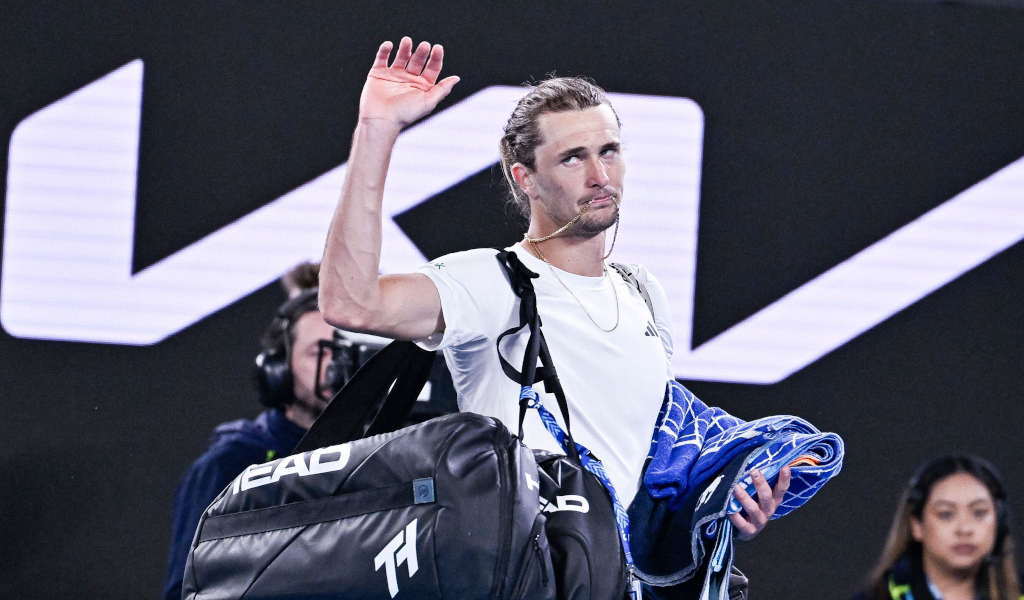
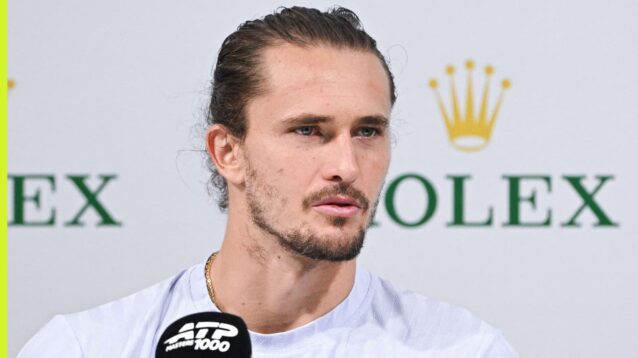
Alexander Zverev played “world-class tennis for over four hours” in the Australian Open semi-final, but made too many unforced errors against the “more solid” Daniil Medvedev, according to Boris Becker.
Following his stunning win over Carlos Alcaraz in the quarter-final, Zverev looked set to book his place in the final against Jannik Sinner after dominating early on against Medvedev.
After winning the opening two sets 7-5 and 6-3, the German found himself 4-3 up and 30-0 love on the Medvedev serve, but the Russian held and then went on to take the tie-breaker.
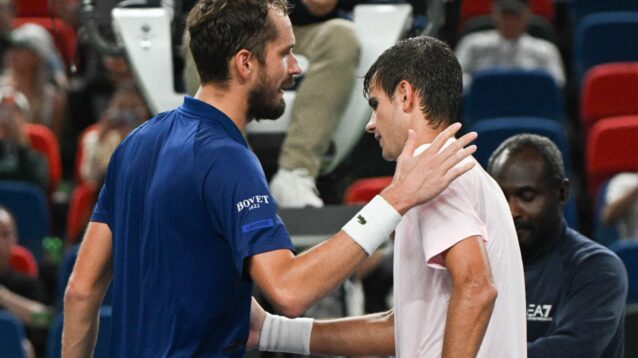
The Russian also won the fourth set via a tie-breaker and eventually came away with a 5-7, 3-6, 7-6 (7-4), 7-6 (7-5), 6-3 win with Zverev falling away badly late in the match.
Zverev committed 70 unforced errors with 21 coming in the deciding set while Medvedev made 41 unforced errors across the five sets.
Former world No 1 Becker says the “statistics don’t lie” as he feels Medvedev was not the better player across the match.
“I’m a bit sad and disappointed,” Becker told Eurosport.
“It started so well for Sascha Zverev, who fought his way into the match and then won the first set. He played well in the second. In the third, you thought Medvedev was tired and couldn’t go on.
“Overall, he [Zverev] perhaps made too many unforced errors in the end – the statistics don’t lie. 70 unforced errors are simply too many. Especially if you look at when that happened – at the end of the fourth and in the fifth set.
“He actually played world-class tennis over four hours, but unfortunately not in the last few minutes.
“Medvedev was not the better player, but the more solid one. He didn’t make so many unforced errors.”
READ MORE: Daniil Medvedev addresses claims he shouted ‘karma’ to celebrate beating Alexander Zverev
Becker did praise Medvedev for his ability to have a Plan B as the 2022 US Open champion once again changed his gameplan after struggling early on.
“He [Medvedev] reached a level that he then didn’t leave. With Sascha, there were waves of emotions between world class and unforced errors. At some point, that shows in the result,” he said.
“In the first two sets, his [Medvedev’s] playing position was too passive, too far behind the baseline. He was able to change that in the third and fourth sets and generated much more pressure as a result.
“He not only had a plan A, but also a plan B – that’s why he’s been number one before and won a Grand Slam.”