Greg Rusedski makes bold Grand Slam boycott prediction amid explosive prize money dispute


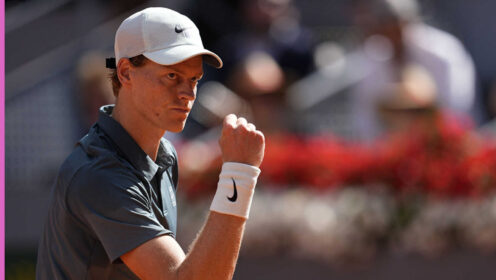
Greg Rusedski has given his perspective on whether top players – such as Jannik Sinner and Aryna Sabalenka – could boycott future Grand Slams amid the growing debate over prize money.
Despite the Italian Open being fully underway, much of the attention in the tennis world has centred on off-court issues.
Sabalenka, Sinner, Coco Gauff, and Novak Djokovic are among a large group of leading players who have made it clear that the proposed 9.53% increase in prize money for the upcoming French Open is not enough.
The players argue that the increase is insufficient given the huge rise in revenue generated by the four Grand Slams through broadcasting, sponsorships, and ticket sales.
Sabalenka was firm in her belief that the sport’s biggest stars may eventually be forced to sit out the tournaments unless they are satisfied with the distribution of prize money.
“Without us there wouldn’t be a tournament and there wouldn’t be that entertainment,” she argued during her pre-tournament press conference in Rome.
“I feel like we deserve to be paid more, I think at some point we will boycott it. I feel like that’s going to be the only way to fight for our rights.”
Latest Tennis News
Iga Swiatek reveals key to winning ‘tough’ first match at the Italian Open after McNally scare
Novak Djokovic’s best chance at a record-breaking 25th Grand Slam title revealed by expert
Rusedski, the former world No 4 and British No 1, weighed in on the debate and admitted that while he understands the players’ frustrations, he does not currently see a boycott taking place.
“I think Sinner also said, you know, we sent a letter in, we didn’t get a reply, but this has been going on for many, many years now,” said the Brit during an episode of the Off-Court with Greg podcast.
“Prize money for getting in the four majors now is nearly $400,000. That’s a 10-to-1 ratio from my last year on tour
“So, prize money has gone up. Yes, I understand wanting more of a split. But if you think about it logically, the only way this strike is going to work is if you get the top 100 men, top 100 women, they all come together on the deadline when they’re supposed to enter, and they all pull out.
“It can’t just be the top 10 or the top five or one player here, one player there. We had that in 1973, I believe, as well, when they had the boycott.
“And that was the year Roger Taylor got to the semifinals of Wimbledon as a Brit trying to win the championships. So we’ve had these situations before where we’ve had boycotts.
“But I don’t see it happening at the moment. Yes, they’d like to get more revenue. Yes, I understand their point of view. And I can really think, yeah, why not try to get as much as you can, because your career is so short.
“For the slams, part of the budget goes to the federations to develop players in their country. On top of that, if you look at the facilities at these major tournaments and at these master series, it’s out of this world.
“They’re always investing back in the structure, the fan experience as well. So I see both coins in the toss. I don’t see it happening, especially this year.”
The organisers of the French Open, which runs from May 24 to June 7, have increased the total prize fund to £53.39 million (€61.7m), a rise of £4.58 million from last year.
As Rusedski mentioned, the world’s top 20 players on both the ATP and WTA Tours signed a collective letter in April 2025 demanding fairer pay for all competitors at Grand Slam events.