Iga Swiatek’s psychologist dismisses ‘besties’ claims over close bond with Wimbledon champion
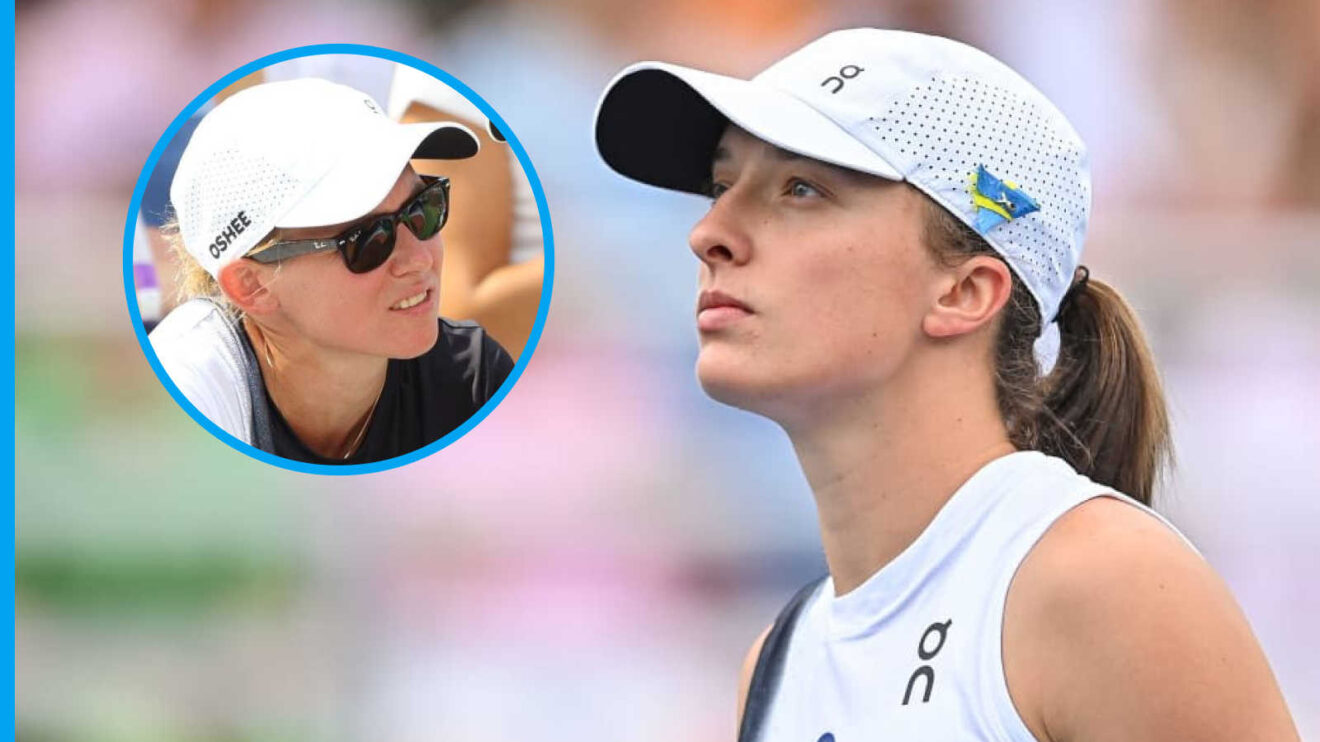
Iga Swiatek’s psychologist has given insight into her relationship with the six-time Grand Slam winner as she discussed suggestions that they are “besties”.
Reigning Wimbledon champion Swiatek started working with Daria Abramowicz when she was still playing junior tennis as the sports psychologist joined her team in 2019 when she was just 17 years old.
Two years later, Swiatek shot to fame when she won her maiden Grand Slam and WTA singles title at Roland Garros as she became the lowest-ranked player (No 54) to win the French Open since the rankings were introduced in 1975.
The Pole became a household name in the tennis world after that as she climbed No 1 in April 2022 and has gone on to add three more French Open titles, one US Open crown and one Wimbledon trophy to her collection.
Swiatek has often credited Abramowicz for taking her confidence to another level with the 38-year-old a permanent member of her team as she travels to all tournaments with the rest of the squad.
Despite their success, Abramowicz’s role has come in for some public scrutiny and even recently, one of Swiatek’s youth coaches questioned their relationship.
But the psychologist has set the record straight as when asked by Grzegorz Krychowiak on the “W stylu Krychowiaka” (Krychowiak’s Style) podcast about the criticism, she said: “What’s fundamental is what the athlete expects, what the goals are, what the roadmap looks like, and how we achieve them. And that determines the methods we use.”
Iga Swiatek News
Iga Swiatek backed for ‘big run’ in Indian Wells as star searches for top form in 2026
Aryna Sabalenka, Iga Swiatek defended by former No 1 after ranking point ‘punishment’ suggestion
After it was pointed out that she spends about 270 days a year with Swiatek, she replied: “That’s the nature of sport. If the team dynamics are such that a tennis player travels with their specialists for 11 months (…), the player wants it, doesn’t feel comfortable working remotely, or is sporadic, or cannot afford to go home every now and then, then this form of work is different. Is it bad? No, it is different.”
Abramowicz pointed out that one of the fundamental aspects of her role is to build a good relationship.
“Even in college, we hear from the first year that building an effective relationship is crucial,” she explained. “But not a relationship where we’re enjoying each other’s company and being besties, but a professional relationship — a foundation that allows the athlete to trust a specialist. It’s exactly like working with coaches.”
Of course, after spending so many years together, they have become closer as she used the example of a coach and players doing team bonding sessions.
Former Poland footballer Krychowiak then stated: “It’s not a professional relationship. You could even call it a form of friendship.”
But Abramowicz countered: “I don’t see it that way. I totally understand why it’s so confusing in perception and interpretation, but that’s how it works in top-level sports, in sports like tennis or alpine skiing, ‘travelling’ sports, that even some athletes say that for them, teams are an extended family, they call them their ‘flock’.
“That’s okay, but it doesn’t mean we operate in a world of braiding each other’s hair and making tea.”