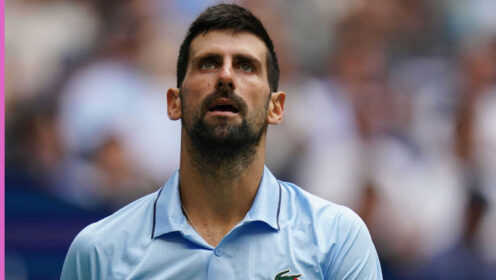
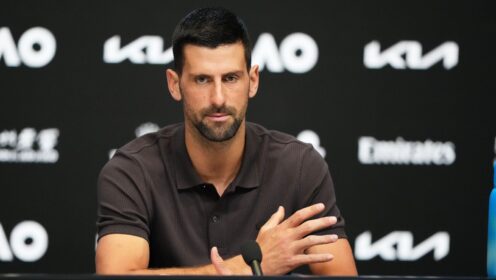
How Novak Djokovic hopes to ‘hide’ his weaknesses by working with ‘highly educated expert’
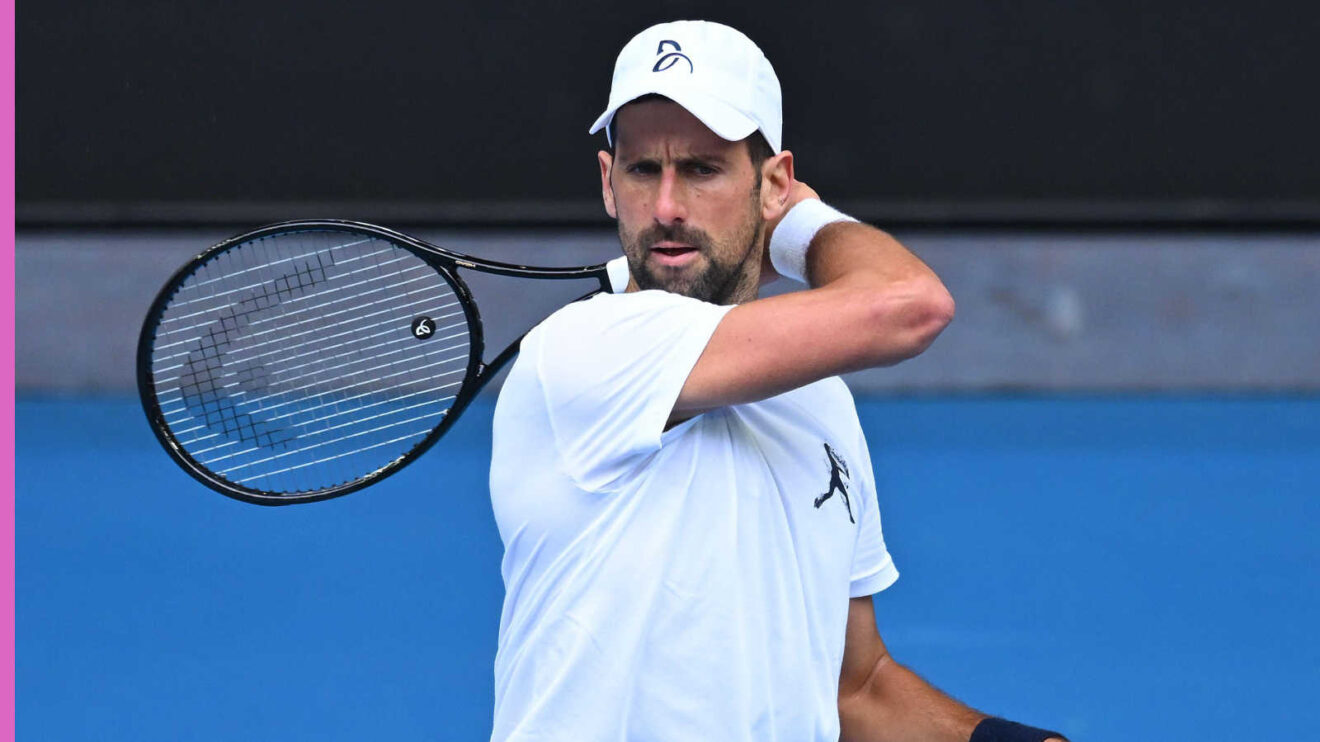
Novak Djokovic is the first to admit that “it is normal” to lose speed, anticipation and decision-making as you get older, but that doesn’t mean he has given up on improving his game as he has worked with a top biomechanics expert to make small gains.
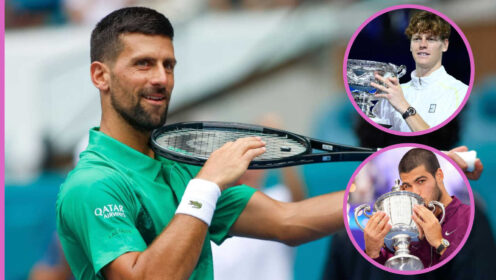
Aged 38, Djokovic remains one of the best in the business as he sits at No 4 in the ATP Rankings and reached the semi-finals of all four Grand Slams last year, but he has been unable to keep up with the top two of Carlos Alcaraz and Jannik Sinner.
The 22-year-old Alcaraz and 24-year-old Sinner have dominated men’s tennis the past two years, especially the majors, as they shared the last eight trophies with Djokovic’s last big title coming at the 2023 US Open.
The Serbian, who turns 39 in May, is looking to become the oldest Grand Slam men’s singles winner at the Australian Open, but in order to keep up with the top two, he needs every help he can get.
Hence, he roped in Mark Kovacs during his pre-season training as he looks to “compensate for what I’ve lost” with Father Time catching up on him.
Australian Open News
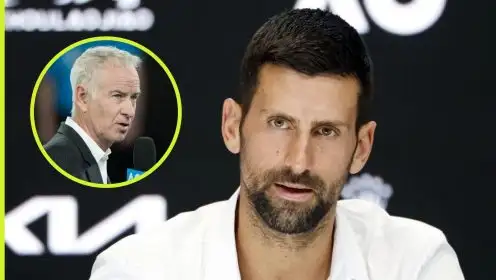
Grand Slam winner makes surprise Novak Djokovic retirement prediction ahead of Australian Open
“We only worked together for seven or eight days in Athens, but it’s possible that we’ll work again,” the 24-time Grand Slam winner told SportKlub. “He is a very qualified and highly educated expert in biomechanics and the kinetic chain.
“That’s the main reason we brought him in – he is one of the most cited experts in tennis, has published numerous books and holds courses and lectures on these topics. We were looking for people who are the most relevant and credible in that field, people with experience.
“Boris [Bošnjakovic] and I spent seven or eight days with him in Athens and it was really fantastic. We had room to work on certain segments of my game, which is always a priority for me.
“Of course, tactics and opponent analysis are always present, especially as tournaments approach, but when I have time, every year I try to work on myself and improve certain parts of my game compared to the previous year.
“Now I feel that I don’t move like I used to. Maybe I’ve lost a few tenths in speed, anticipation and decision-making on the court compared to the period when I was dominating tennis – which is normal, it’s biology.
“At the stage of my career I’m in now, I need to compensate for what I’ve lost, to improve myself so that I can ‘hide’ my weaknesses and emphasise my strengths – in order to compete at the highest level with Alcaraz and Sinner, and with everyone else”.