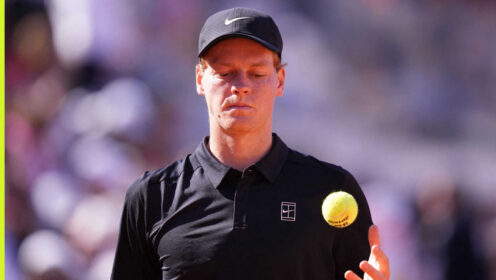
Nick Kyrgios faces ‘preferential treatment’ claims after criticising Jannik Sinner


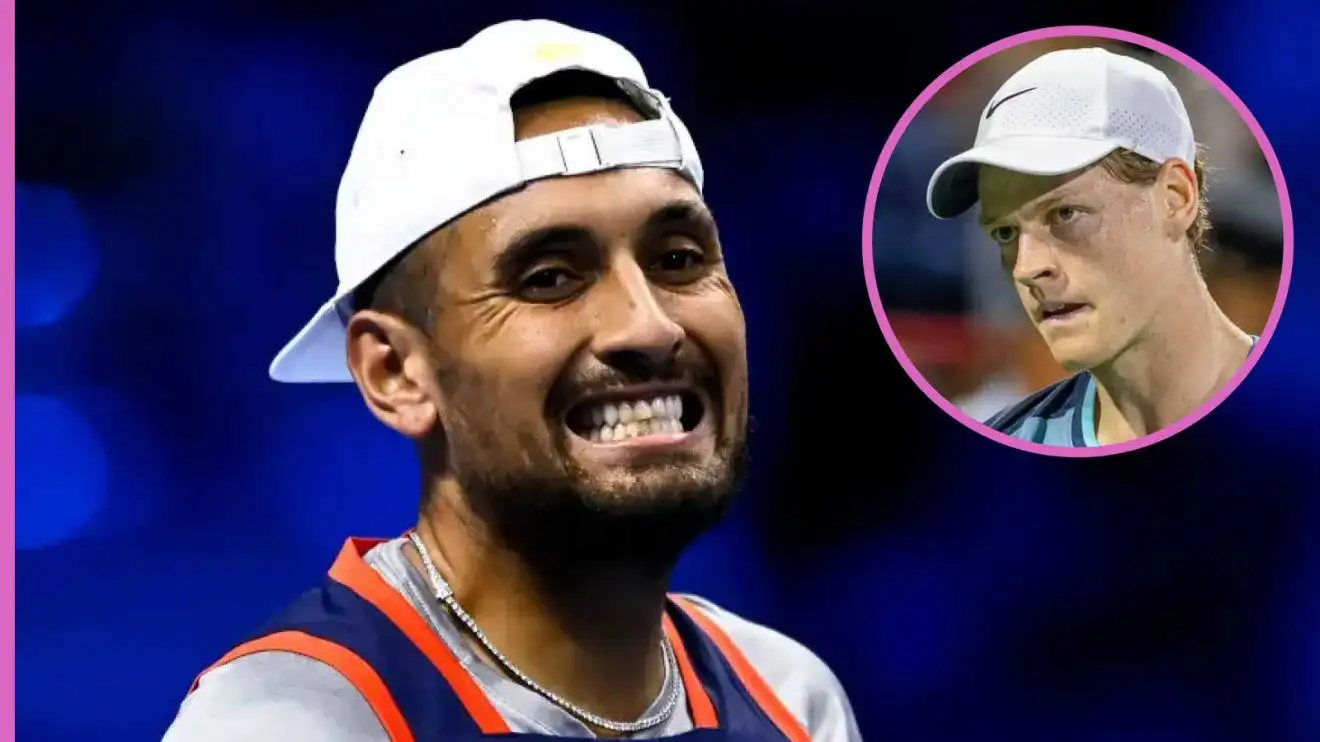
Nick Kyrgios’ one-month ban for testing positive for cocaine has led to accusations of preferential treatment – something he levelled at Jannik Sinner for his failed drug test.
The Australian took to social media last month to say he had been suspended after his sample submitted at the Mallorca Open on 22 June was found to contain benzoylecgonine, a metabolite of cocaine.
The 31-year-old was provisionally suspended on 4 August but is now free to return to action after the International Tennis Integrity Agency accepted his explanation that he used the drug at a nightclub in Magaluf on 20 June.
The Agency acknowledged that the substance was used outside of competition and, instead of getting a three-month ban, it was reduced after Kyrgios entered a treatment programme.
Now, fellow Australian Omar Jasika, who says he is a friend of the 6ft 4in player, has had his say on the matter. In an Instagram post, the 29-year-old recounted how he was banned for two years (2018-20) for testing positive for cocaine.
More US Open News
How Alex Eala took her game to the next level to become a US Open contender
Want more from Tennis365? Add us as a preferred source on Google to your favourites list for tennis coverage you can trust.
The former world 177 revealed how he effectively lost four years of his career as the Coronavirus pandemic kept him out of the game for the best part of 24 months.
Jasika stressed that Kyrgios should not receive a longer ban, that different rules are in place now and he only wished that the “same help and understanding” had been extended his way.
He said on social media, “In 2018, I received a two-year ban after testing positive for the same substance. I accepted responsibility for my actions and served every day of that suspension. Because COVID arrived shortly after I became ineligible to return, I effectively lost almost four years of my career during some of the most important years of my life.
“Today, the rules have changed. A player in a similar situation can receive a one-month ban by entering an approved treatment program. I’m not saying Nick should have received a longer ban. I don’t believe that at all. I’m saying I wish the same help and understanding had been available to me.
“I made a mistake and deserved consequences, but losing two years of my career was incredibly difficult. At the time, I wasn’t offered treatment or a clear pathway back. I was simply removed from the sport and left to deal with everything that came with it.
“I’m glad the system has changed and now focuses more on helping players, but it’s hard not to wonder how different my life and career might have been if those same options existed for me. This isn’t me against Nick. It’s me asking whether the punishment I received was fair, and whether people affected by the old rules deserve to have their cases looked at again.”
Compatriot Max Purcell, who served an 18-month suspension for the use of a “prohibited method” relating to the intravenous infusion of vitamins, responded with the raising hands emoji.
And on X, some have said this is ironic as Kyrgios is now being given “preferential treatment”.
One user wrote, “So…Kyrgios got a preferred treatment…like the one he was accusing Sinner of?” and another put, “Oh the irony of Nick getting preferential treatment.”
One person commented, “[The] Sinner case is the reason Nick got less [of a] punishment.”
World No 1 Sinner failed a doping test in 2024. It was ruled that the Italian accidentally ingested a banned substance, clostebol, through a first aid spray.
The World Anti-Doping Agency got involved and a settlement was reached where Sinner was suspended for three months. This led to heavy criticism of the process, with Kygios particularly outspoken about this.
In December 2024, Kyrgios said it was “disgusting for our sport” that Sinner and Iga Swiatek had gotten mired in doping breaches, with the latter accepting a one-month suspension that year for testing positive for trimetazidine.
The Aussie also said that Sinner had been “protected to some degree” with his short suspension but now, those accusatory fingers are being pointed at Kyrgios.
WHAT NEXT? Tommy Paul’s ‘shot of the US Open’ prompts calls for niche Grand Slam, ATP and WTA Tour rule change